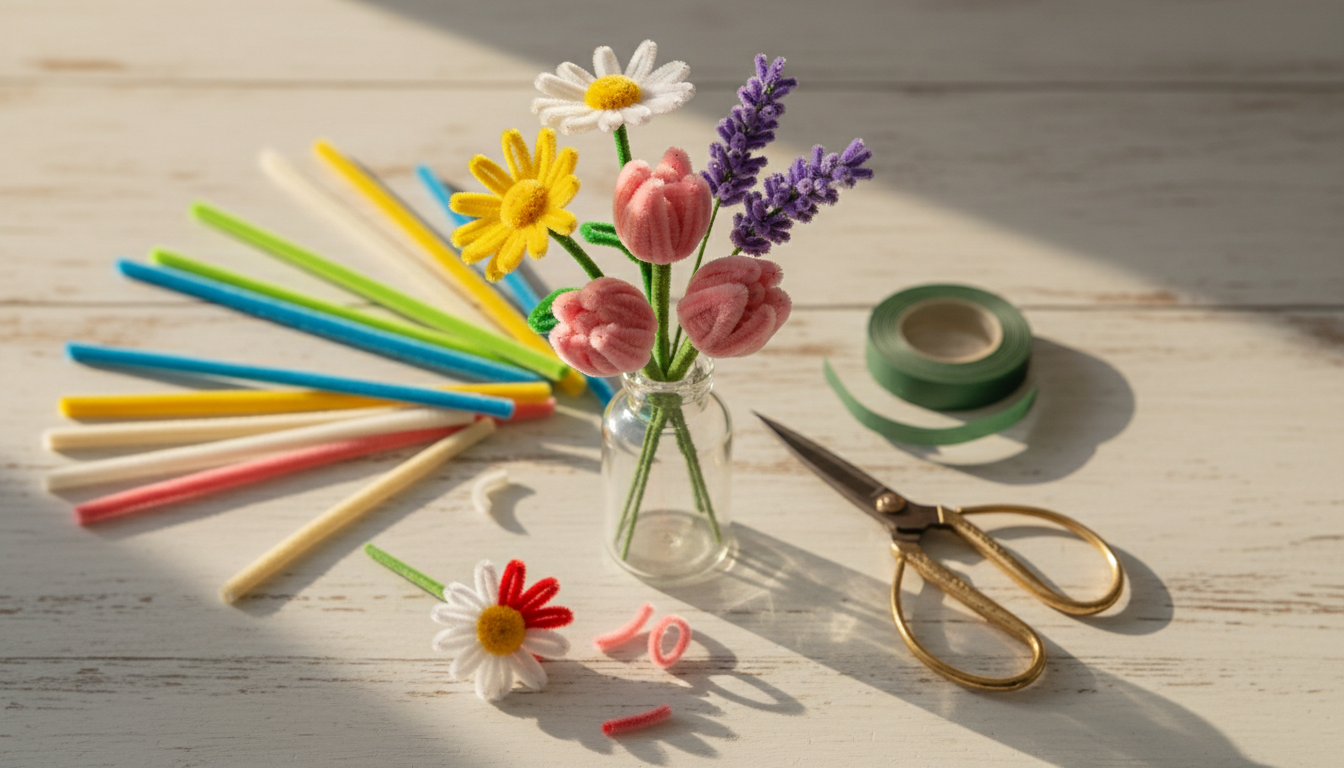
The other rainy Saturday, I found a forgotten bag of chenille stems in my craft closet and had a sudden burst of inspiration. I wasn't thinking about kids' crafts; I was thinking about chic, everlasting bouquets. An hour later, my desk was covered in the most charming, fluffy little blooms! I was completely hooked. This isn't just a nostalgic craft; it's a genuinely stylish and affordable way to create stunning decor. If you're looking for a relaxing, rewarding project, learning to make pipe cleaner flowers is it. Let's dive in and create some beautiful, never-wilt arrangements for your home that are bursting with personality and handmade charm.
Gather Your Supplies: The Ultimate Pipe Cleaner Flowers Toolkit
Before we start twisting and shaping, let's get our crafting station ready. The beauty of this project is its simplicity—you don't need much! At a minimum, you’ll want a variety of pipe cleaners (also called chenille stems). For stems, green is a classic choice, but don't be afraid to get creative. You’ll also need a good pair of wire cutters or old scissors you don't mind using on wire. For a budget-friendly start, a multi-color pack of standard pipe cleaners from any craft store is perfect. If you’re aiming for a more luxurious, velvety look for your petals, I highly recommend splurging a tiny bit on high-density chenille stems, like <strong>this affordable one from Amazon. They’re fluffier and create a fuller-looking flower. To elevate your bouquet, grab some green floral tape to wrap your stems for a more realistic finish. It gives them a smooth, professional feel that looks amazing in a vase and is a secret weapon for an elevated handmade look.
Crafting Your First Bloom: The Classic Pipe Cleaner Daisy
Let's start with a cheerful classic: the daisy! It’s simple, sweet, and instantly brightens any space. First, take a single pipe cleaner for your petals (white or yellow is classic, but pink or blue is adorable!). Fold it in half, then in half again, so you have four equal sections. Snip at the folds to get four small pieces. Now, take each piece and bend it into a teardrop or 'U' shape for your petal. For the flower’s center, take half of a yellow or black pipe cleaner and coil it tightly into a small, flat spiral. To assemble, simply twist the bottom of each petal around the center spiral, spacing them out evenly. For the stem, take a green pipe cleaner, fold the top inch down to create a small hook, and twist that hook securely around the base of your flower head. Voilà! You have a perfect daisy. A small bunch of these in a bud vase is one of my favorite small apartment decorating hacks for adding a pop of color to a bookshelf or nightstand.
Level Up Your Bouquet with Elegant Pipe Cleaner Tulips
Ready for something a bit more elegant? Let's make tulips. Their iconic cup shape is surprisingly easy to replicate and looks so chic. For one tulip, you’ll need three pipe cleaners in the petal color of your choice—I love soft pastels or deep jewel tones for this. Take your first pipe cleaner and form a wide, rounded 'M' shape. Then, gently twist the two ends together at the bottom. This creates your first two petals. Repeat this with the other two pipe cleaners. Now, hold your three petal pairs together, staggering them slightly to create a fuller, 6-petal look. Pinch and twist all the ends together tightly at the base. To get that signature tulip cup, gently curve the petals inward with your fingers. For the stem, use a green pipe cleaner or a piece of floral wire wrapped in floral tape for extra sturdiness. Attach it by twisting it firmly to the base of the petals. These look absolutely stunning grouped together and offer some seriously cozy living room inspiration when placed on a mantelpiece or coffee table.
Pro Tip: For a beautiful, variegated look, try twisting two different colored pipe cleaners (like pink and white) together before you shape them into petals. It creates a subtle, painterly effect that looks incredibly high-end.
Creating Realistic Pipe Cleaner Flowers: The Lavender Sprig
For a touch of rustic, aromatic charm, let's create a sprig of lavender. This variation is all about repetition, making it a wonderfully meditative process. Start with a green pipe cleaner for your main stem. Then, take a purple pipe cleaner and cut it into 2-inch pieces. Starting about two inches from the top of your green stem, take one small purple piece and wrap it tightly around the stem once or twice to secure it. Leave the two little ends sticking out like buds. Move a tiny bit down the stem and repeat with another purple piece, rotating it slightly. Continue this process all the way down, leaving a bit more space between the wraps as you go. You’re essentially creating a lovely, textured spire of purple buds. Make three to five of these sprigs and pop them in a tall, thin vase. This is one of the best budget home décor ideas because just a few sprigs make a big impact. They look airy and inviting on an entryway table or in a bathroom.
Pro Tip: Once your lavender sprigs are finished, add a single drop of lavender essential oil to the fluffy purple buds. It adds a lovely, subtle scent that enhances the realistic feel and adds a calming aromatherapy element to your space.
Final Thoughts
And there you have it—three beautiful and distinct variations of pipe cleaner flowers to fill your home with handmade joy! From the simple daisy to the elegant tulip and rustic lavender, you can create everlasting arrangements that perfectly match your style. The best part is experimenting with colors, shapes, and textures to invent your own floral species. I hope you feel inspired to grab some chenille stems and start creating. If you loved this tutorial, please share it on Pinterest! It helps others discover the fun. Happy crafting, and I can't wait to see what you make!